
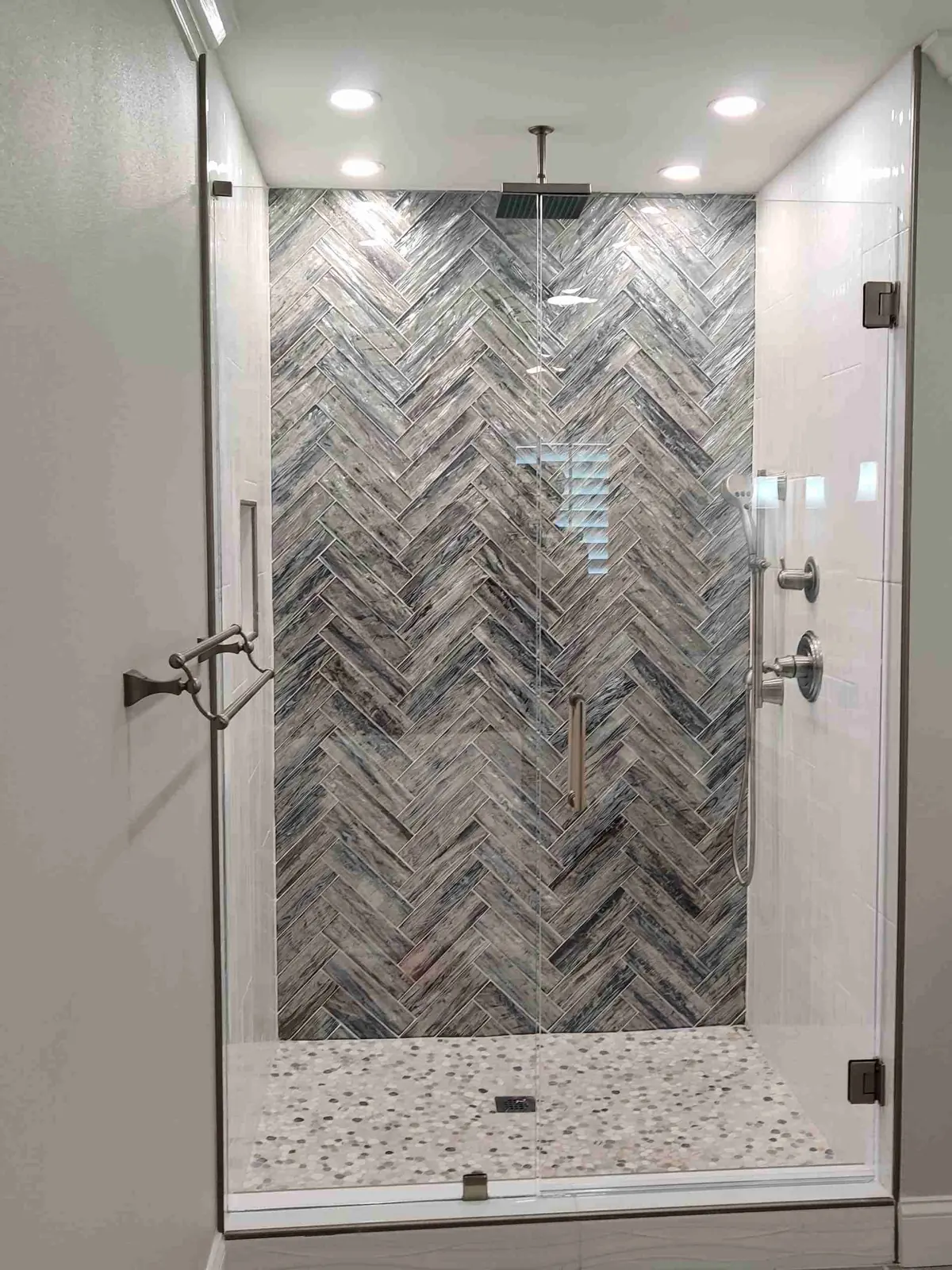
An accessible shower starts with the person using it. Check the entry, the room to move and whether controls are easy to reach. Frameless glass can be part of that plan, but the door alone doesn't make a bathroom accessible.
When it comes to choosing the right shower door for accessibility, installing a frameless shower door can be the perfect solution. Unlike a framed shower door, frameless shower doors create an open, accessible space, since the bulky metal frame is eliminated.
A frameless shower door will also enhance a bathroom’s appearance while providing easier access for seniors and people with mobility issues. These doors feature a wide entryway, making it more convenient for people with limited mobility to exit and enter the shower enclosure safely.
Common bathroom dangers for seniors
Shower seats, grab bars, and handheld shower heads can improve shower safety, however, even with these safety features in place, an elderly person may still be at risk of falling. Most bathrooms have the same two types of hazards- protruding or sharp objects and slippery surfaces.
Below are bathroom hazards that can increase the risk of falls:
- If a shower opening is too narrow, entering and exiting the shower can be difficult.
- Poor sealing of shower doors can result in wet floors
- Cheap bath mats that are meant to improve traction can become additional slip hazards that can increase the risk of potential injuries
- Poor lighting can decrease an elderly person's visibility, increasing their risk of falls
- The lack of stability features can result in the use of a flimsy towel bar to stay steady
- Water heater thermostats that are set too high can lead to second-degree burns
A fall getting in or out of the shower can cause a serious injury. A wide entry, good light and grab bars make the trip in and out easier.
Shower curtain or glass door for an elderly parent?
A curtain is cheaper, slides out of the way for a caregiver and leaves the whole opening clear. A glass door that closes keeps more water in the shower than a curtain, so the floor outside stays drier. A swinging door needs room to open. Nobody should lean on or grab the glass or its handle for balance. A door handle or towel bar is not a grab bar, so put real grab bars where hands go.
Why frameless glass shower doors for accessibility?
A custom frameless door can be sized around the entry and clearances the person needs, such as a wide opening or no curb.
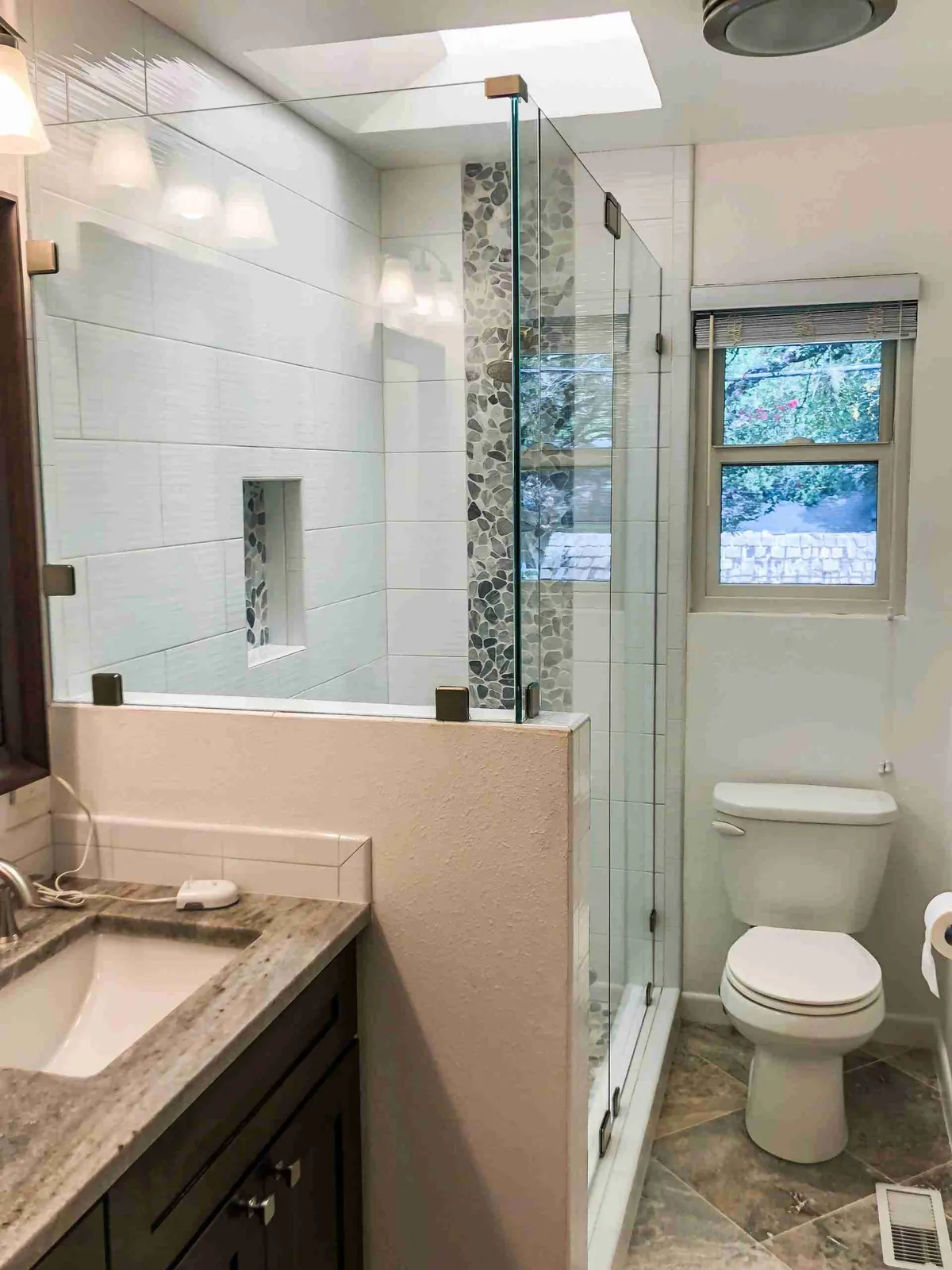
Zero-threshold shower entrance
A curbless entry means there is no step to trip over at the door. A curbless walk-in shower creates a smooth surface for wheelchair access while eliminating the need for complicated wheelchair-to-shower chair transfers or the need to step over a threshold to enter or exit the shower. With this design, a glass contractor can install swinging shower doors, which only require minimal hardware to mount, as opposed to sliding shower doors which would require a track, making it difficult for wheelchair access.
Wider shower doors
A narrow shower door can make it challenging for a senior with mobility issues to enter. Wide shower doors can help someone with a walker or in a wheelchair to easily transfer to a shower chair. Wider doors will also allow in-home care assistants to get in and assist with a senior’s shower needs.
Unique shower layouts for the elderly or the handicapped
Grab bars or safety rails give a solid handhold getting in and out and during the shower. Have them fixed into studs or blocking.
Shower chairs with arms can be a perfect option for elderly family members who have difficulty standing for long periods of time. Shower chairs provide the perfect resting surface during a shower, while making it easier to wash hard-to-reach areas.
Handheld shower heads allow loved ones to bathe without standing up.
Use a non-slip mat or textured floor inside the shower. If you keep a mat outside, pick one with a non-slip backing that lies flat. A loose mat is a trip hazard.
Common shower design errors to avoid!
While it may seem simple enough to keep a bathroom safe, shower design errors are still far too common.
The most common errors include:
- Installing a shower threshold at the entrance
- Installing a shower head too far away from the shower bench
- Shower controls that have been installed too far from the shower bench
- No place to store shower supplies inside the shower
- Too many obstacles in or around the shower area