
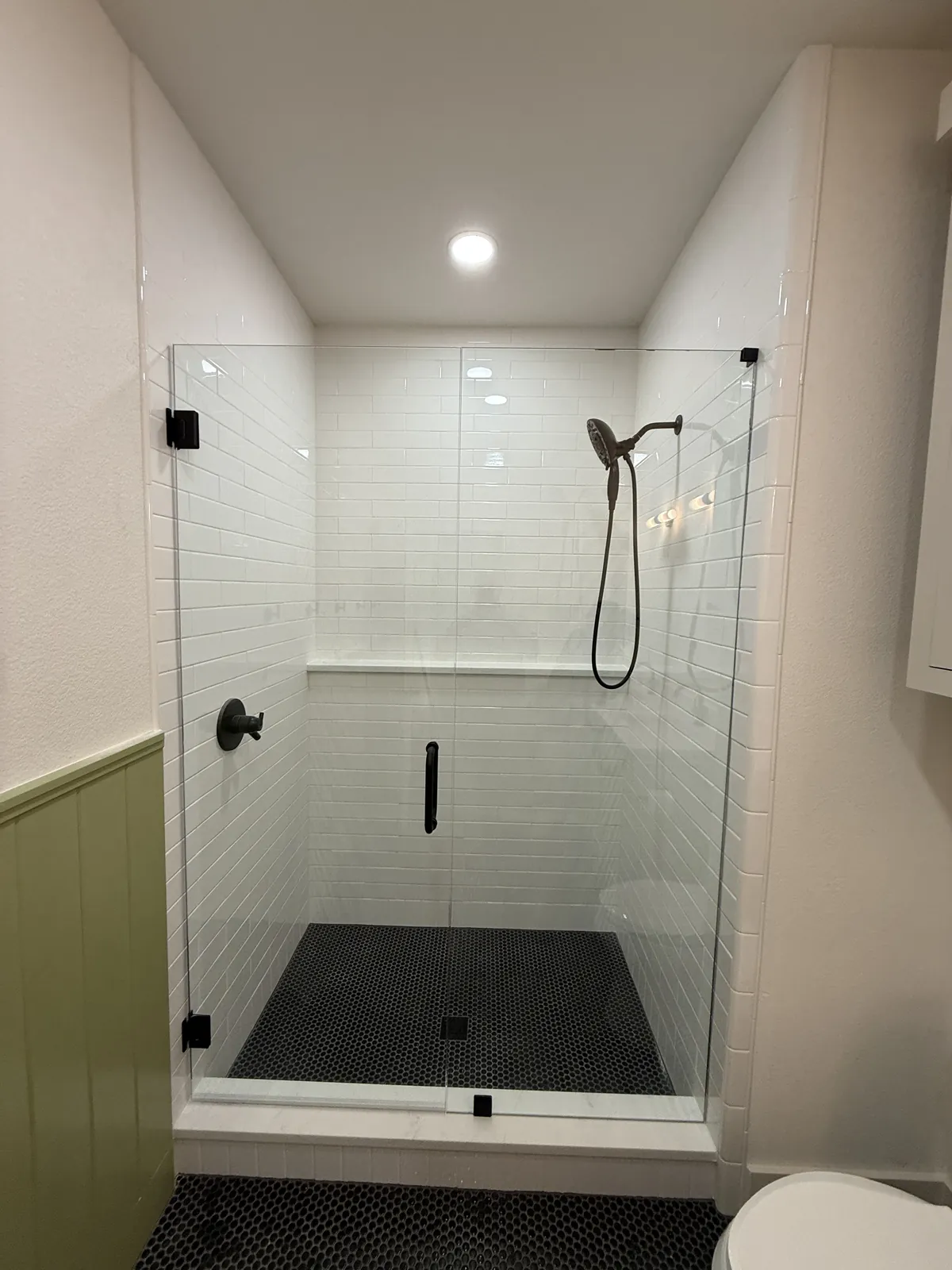
Measuring the shower helps establish which door layouts may fit. Width is only part of it: the finished surfaces and space for the door to move also matter. Use early measurements for planning, then have the installer confirm the opening before fabrication.
Installing a new shower door can instantly transform an outdated bathroom. However, taking accurate measurements of your shower’s layout is crucial to narrowing down your choices and selecting a glass shower door and enclosure that will work with your budget, style preferences, and bathroom layout.
There are a variety of shower doors to choose from, including:
- Swinging shower doors
- Hinged doors
- Pivot doors
- Sliding shower doors
- Bypass glass doors
And more.
Whether you want a traditional shower door, or glass shower doors that are custom-made, taking accurate measurements can help you narrow down your choices to the types of shower doors that can make an otherwise cramped bathroom feel larger and more inviting.
What supplies will you need?
To take accurate measurements of your shower space, gather the following supplies:
- Measuring tape
- Notepad
- Pencil
- Level
Clear out the space and clean your shower
Before taking bathroom shower measurements, thoroughly clean the shower space to remove moisture, debris, and dirt from the ceiling, walls, and shower floor. This will ensure you take accurate measurements of the layout since trapped moisture can impact measurements.
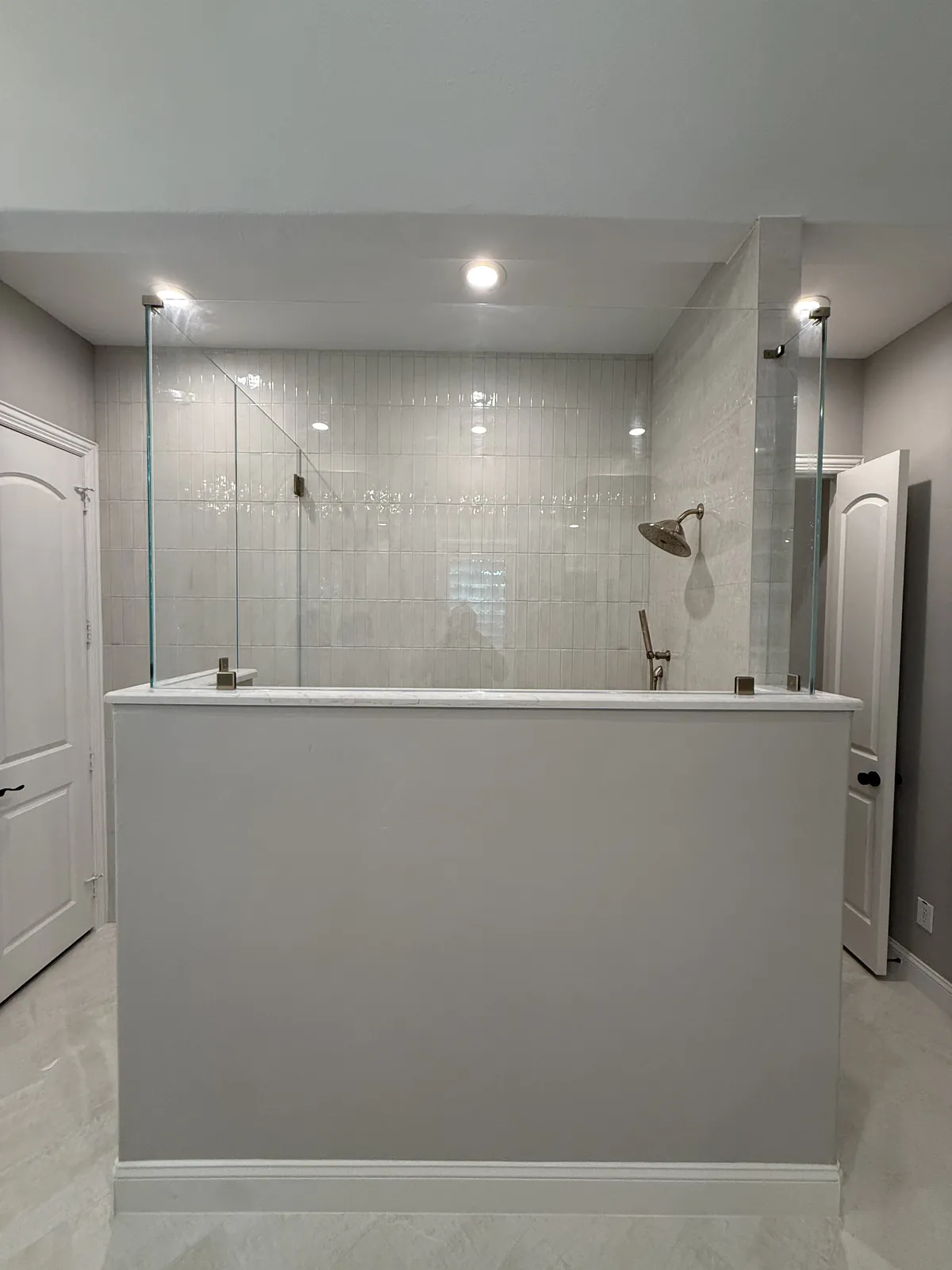
Create a sketch and take notes as you go
Create a rough sketch of your bathroom and current shower space, creating a diagram. This can be used as a visual reference and allows you to label each portion of the shower with the measurements you’ll take. You can also take note of any areas of discoloration in your shower, cracks, or any other issues you noticed as you were deep cleaning.
Measure the width of the shower enclosure
If you have a walled shower, tub base, or shower stall that already has a doorless entry installed, to measure the width, you’ll need to take your tape measure and measure from one side to the other. For a corner enclosure, you’ll measure from the wall to the proposed outer corner. If you have a curved shower, you’ll measure the same way you would a corner shower, then measure from your endpoint to identify the width of the other corner.
Ensure your shower's walls are plumb
In an older home, you may not have perfectly straight shower walls. To determine if your shower walls are plumb, you’ll use your level. If the bubble in the level is not in the center of the vial, you will need to identify how far out of plumb a wall is by moving to the bottom or top of the level away from the wall until the bubble rests in the center of the vial. If your walls are not plumb, an experienced installer can correct this issue before installing your new glass shower enclosure.
Measure the shower enclosure's height and depth
If you have a tub or shower base, measure from the top edge of the base to the top edge of the tiles in the shower. This will ensure that the top of the shower enclosure lines up with the tile backsplash. If there’s no shower base, you’ll measure from the floor to the top edge of the tiles, allowing room for 1-3 inches for the shower base.
If there’s already a shower base, you can measure the width and length of the base to determine the right shower dimensions.
Measure the opening for the shower door
Taking your measuring tape, measure lengthwise across the bottom and top of the shower for an inline opening. If you’re measuring an opening with a return, you’ll measure at the center of the curb.