
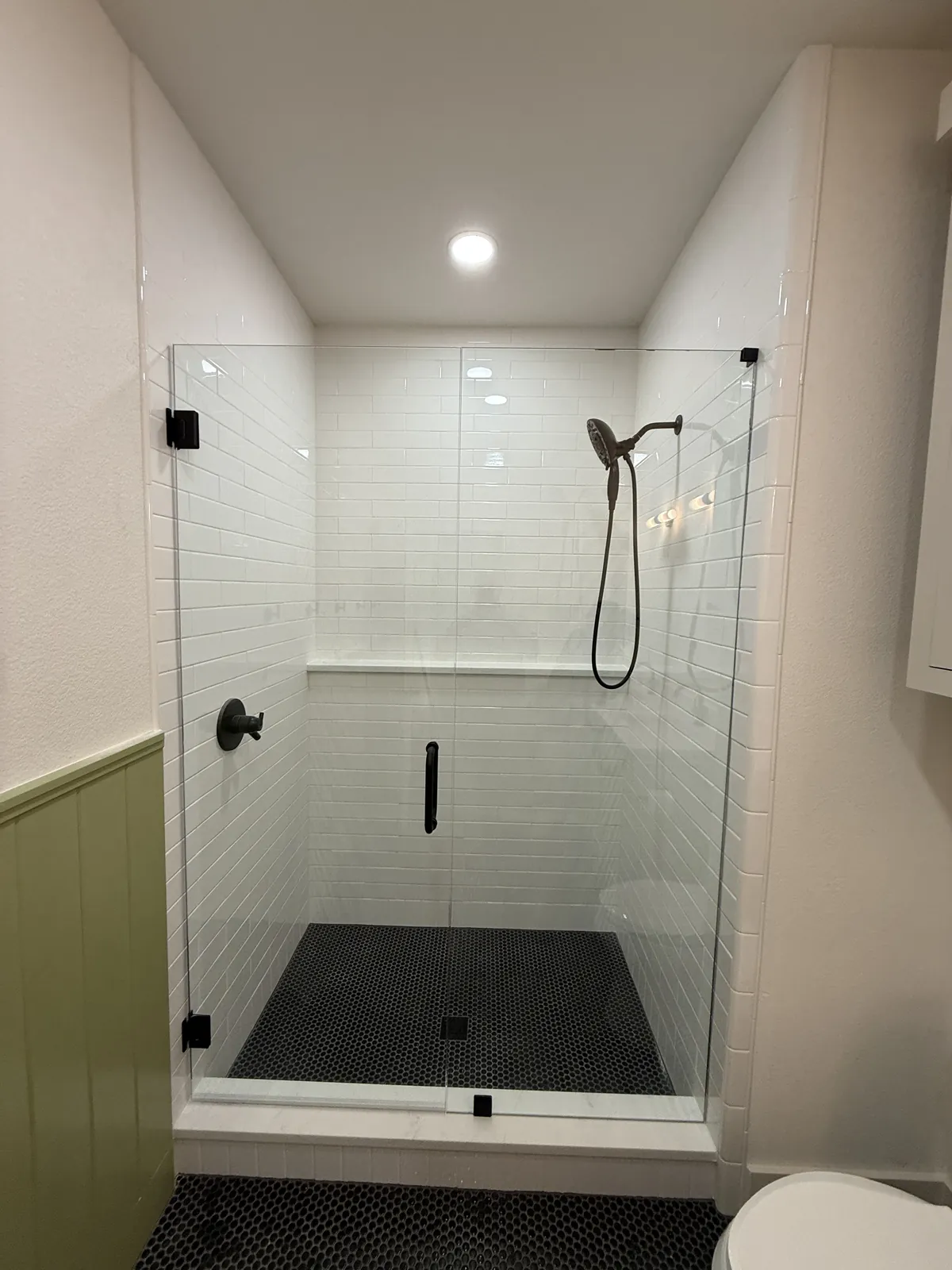
Pivot doors and side-hinged doors both swing open, but they support that movement in different places. The choice affects clearance and the usable entrance. Check the layout around the shower before choosing the hinge arrangement.
You will see both on modern shower enclosures. What separates them is where the door is held and how much room it needs to swing.
How pivot and hinged doors work
A hinged door works like the other doors in your house. Hinges on one side fix it to the wall or, in some layouts, to a fixed glass panel.
Pivot doors work differently. Instead of hinges mounted on the side, pivot doors rotate on an axis. The pivot point can be centered or slightly offset.
Central pivot doors rotate from the middle of the door, allowing the door to open both inward and outward. Offset pivot doors have the pivot point closer to the edge, which typically allows the door to swing in one direction.
Which one fits depends mostly on the room around the shower.
Space, layout, and door swing considerations
Start with the room. Check the clear floor space in front of the shower and note what the door could hit when it swings.
Smaller bathrooms often have limited room for a door to swing open. In these situations, a pivot door can be a helpful solution because it can require less swing clearance depending on the design.
Larger bathrooms offer more flexibility and can work well with either option. However, traffic patterns and floor space still matter. Plan for the door to swing out of the shower. The residential code most DFW cities use says hinged shower doors must open outward, and many frameless hinges and pivots swing both ways. The shower curb must slope inward toward the drain.
It is also important to consider nearby fixtures or obstructions. If the shower is located close to sinks, toilets, or pony walls, the direction and type of door swing can make a big difference. Choose the option that supports both your layout and everyday convenience.
Style and design differences between the two
Then think about the look.
Pivot doors are often chosen for their sleek and contemporary appearance. Hinged doors tend to feel more classic or transitional depending on the enclosure design.
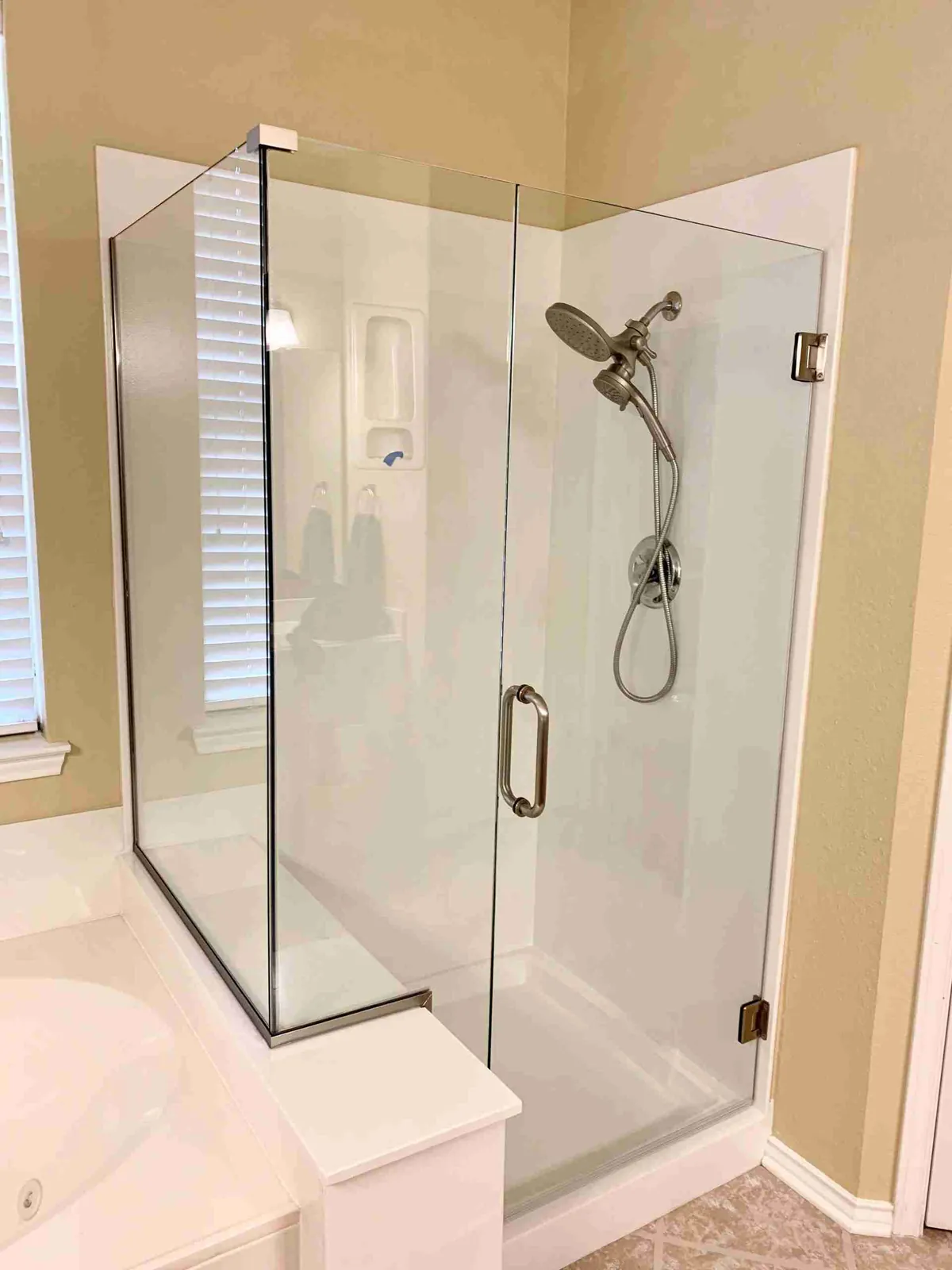
Hinged doors are a versatile and reliable solution for many shower styles. Whether your enclosure is framed, semi-frameless, or fully frameless, there is usually a hinged option that fits well.
Pivot doors have a clean, minimal look and are common on semi-frameless and frameless glass, where the sightlines stay open.
Installation needs and structural support
Either door needs solid backing.
Every shower door needs secure anchoring, the right glass thickness and hardware sized for the weight of the glass.
Thicker glass panels are heavier and require stronger support systems. Thinner glass panels are lighter but may benefit from framed or semi-frameless designs for additional stability.
Depending on the enclosure design, glass panels can be anchored to the wall, floor, ceiling, or a combination of these surfaces using specialized hardware.
Whatever door you choose, it needs solid walls, accurate measurements and a proper install.
Maintenance, durability, and everyday use
A little routine care keeps either door working: regular cleaning and a look at the hardware now and then.
Hinges, pivot hardware, and seals naturally wear down over time, even with careful maintenance. Several factors contribute to this wear, including high humidity, heat, hard water, mineral buildup, and everyday use.
Hinges may begin to feel stiff, pivot hardware can develop corrosion, and seals may warp or weaken.
Regular cleaning helps reduce mineral deposits and buildup that can affect these components. Wiping down the shower after use can also help keep surfaces dry and minimize moisture-related issues. It is also helpful to periodically inspect moving parts and choose hardware designed for long-term durability.
Matching door style to your bathroom and routine
Pick the door for how you use the bathroom, not only for how it looks.
Finding the right option requires thinking carefully about your bathroom layout and daily routine. Consider the size of the shower area and whether there are obstructions, angled walls, or nearby fixtures that could affect door movement. Decide whether you prefer clear, open sightlines or if you are comfortable with more visual separation.
Your daily habits matter as well. To help keep the bathroom floor dry, look at the door seals, the bottom sweep and a curb that slopes inward toward the drain. The door itself should still swing out. Accessibility, ease of use, and the overall atmosphere you want in your bathroom should all play a role in your decision.
You will use this door every day, so it is worth getting the swing and the clearance right.
Get in touch today. Send photos and rough dimensions for a quote within 24 hours. Larger or more complex projects get an in-person measurement.