
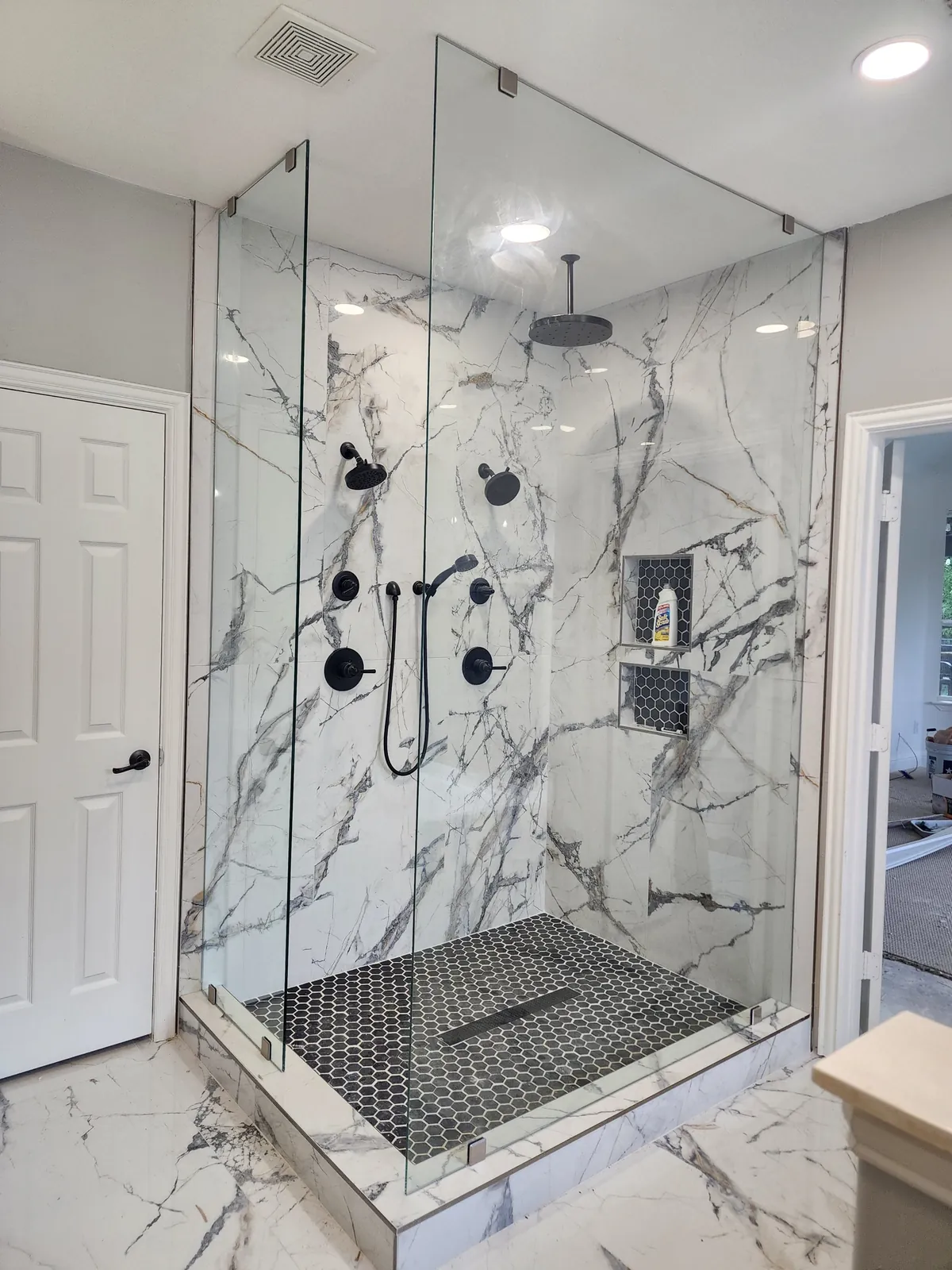
Glass treatments can make soap and mineral deposits easier to remove. They still need the care routine specified for the product. Before choosing a coating, ask what it does, how to clean it and whether it needs to be renewed.
The aim is less scrubbing: water and soap residue wipe off more easily.
Understanding glass surface treatments
Glass surface treatments are invisible protective coatings that chemically bond to glass, creating a water and oil repellent barrier. This bond works by filling microscopic pores on the glass surface where soap scum and mineral deposits usually accumulate. When applied correctly, water beads roll off easily, carrying away dirt before it settles.
Because water runs off instead of sitting on the glass, there is less for minerals and soap to dry onto. A coating does not replace cleaning. It makes cleaning quicker.
How treated glass improves shower performance
Untreated glass slowly clouds as hard water minerals and soap scum dry on it. A coating slows that down, so the glass is easier to get clear again.
Frameless shower doors with sleek pivot hinges or smooth sliding mechanisms stay spotless and easy to operate with minimal effort.
Water beads up and runs off, taking some of the residue with it. You still clean the glass, usually with milder cleaners and less scrubbing.
Comparing treated vs. Untreated glass
Untreated shower glass collects soap scum, hard water spots and mineral buildup, and getting it clear again takes more scrubbing. Many people end up reaching for a lime remover or a soft scrub.
On the other hand, treated shower glass features a stain-resistant coating that allows you to wipe it down with microfiber cloths and a mild detergent. No more scraping away mineral deposits with a non-abrasive sponge or reapplying DIY water-repelling sprays. A single swipe with a silicone squeegee or damp cloth keeps it spotless.
The real benefit is time: a quick wipe instead of a scrub.
A coating cuts down on water spots and soap scum. It does not stop them completely.
These professional coatings are useful for both new installations and post-remodeling upgrades.
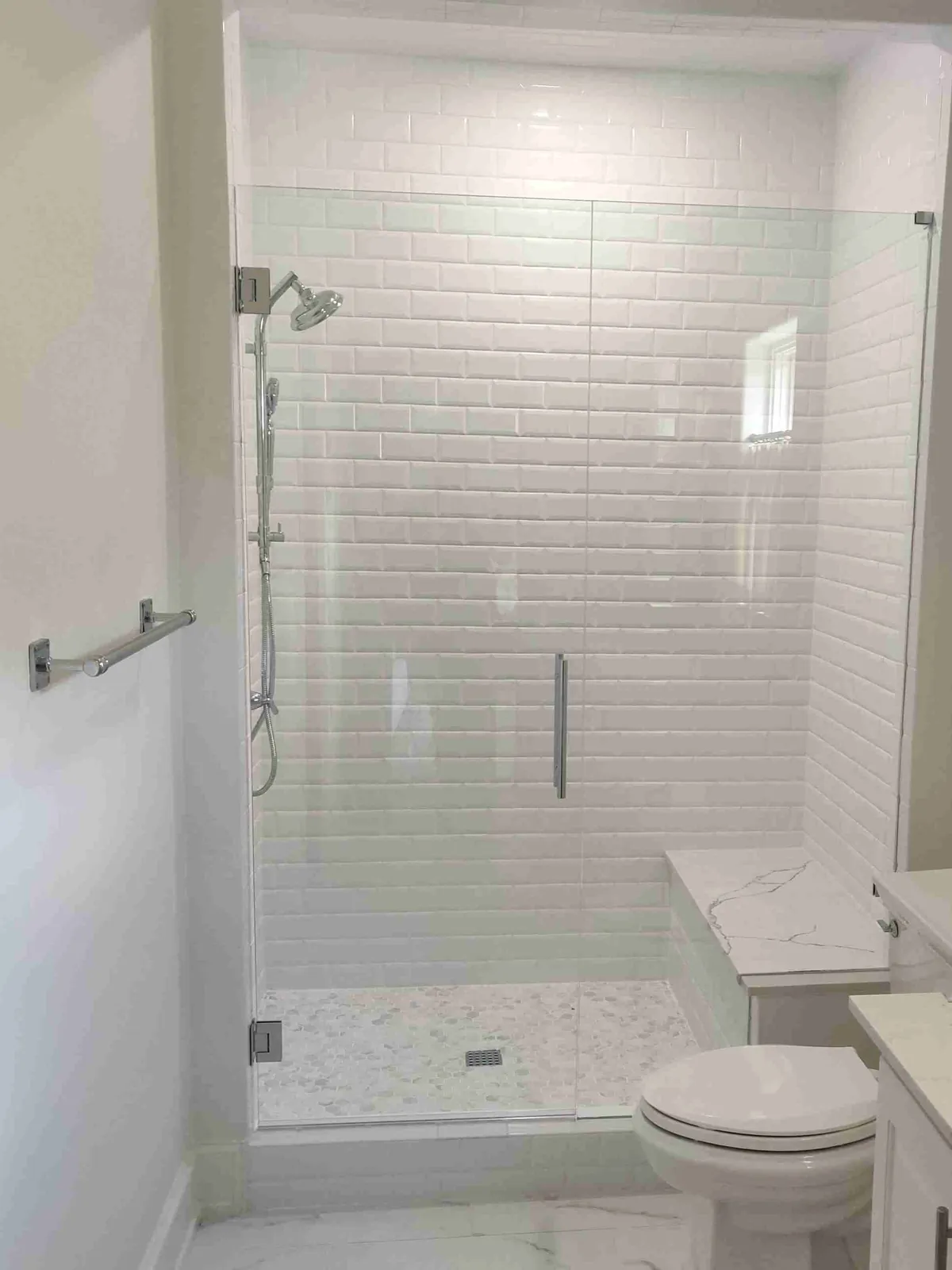
Ideal applications for treated glass
Treated glass isn’t limited to shower glass panels alone. It’s a versatile solution suited to frameless shower enclosures, mirrors, wine rooms, and bathroom partitions. The tempered shower glass panel used in these installations benefits greatly from a protective glass treatment that repels hard water minerals and soap scum.
A coating works on sliding and hinged doors alike.
In a bathroom with poor airflow the glass stays wet longer, so a squeegee after each shower matters even more there.
Maintenance tips for longevity
To maintain your treated shower glass, gentle care goes a long way. Always clean with mild cleaners or a mild detergent and avoid harsh chemicals. Use microfiber cloths and a non-abrasive sponge to remove residue, ensuring the glass coating stays intact. After every shower, wipe your glass doors with a silicone squeegee to prevent water spots and soap scum from forming.
Occasionally, apply a soft scrub or citric acid solution for deep cleaning, especially if hard water is present. For stubborn stains, products like CLR Calcium, Lime and Rust Remover, or RMR-86 Instant Mold and Mildew Stain Remover can be used safely with caution.
Keeping the silicone seals and sliding mechanisms dry also prevents mold and mildew.