
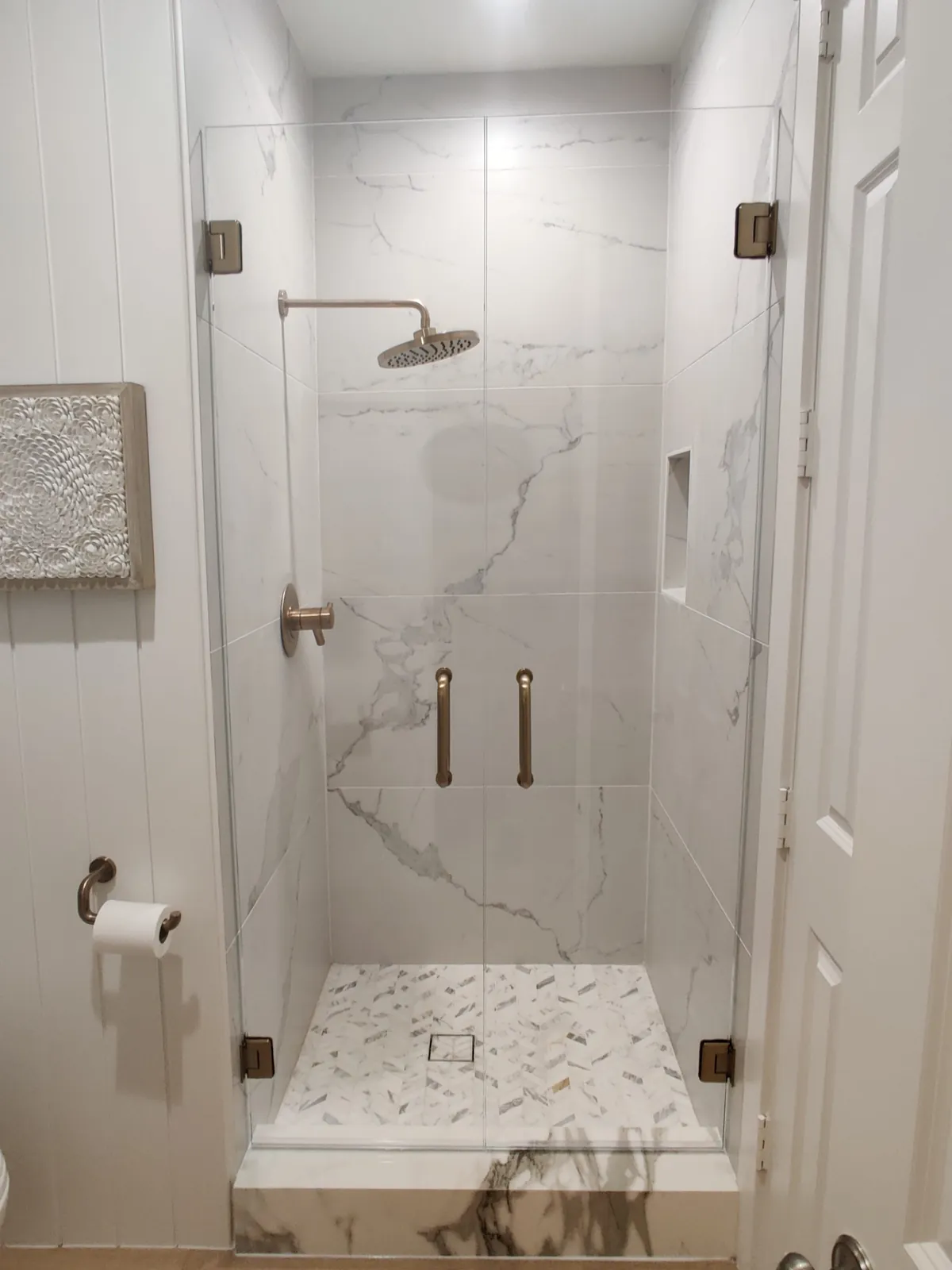
Start with how the shower door will open. If a swinging panel would hit the vanity, that rules out some options straight away. Once the layout works, choosing the glass and finish becomes much easier.
Understanding different shower door styles
There are three basic types: framed, semi-frameless and frameless.
- Framed shower doors wrap the entire glass panel in metal, making them one of the sturdier and more affordable options on the market. If you have a traditional shower enclosure and want something dependable without breaking the budget, framed doors are worth considering.
- Semi-frameless shower doors sit in the middle ground. They use minimal framing for structural support while cutting down on the visual bulk. They're easier to clean than fully framed systems and give your bathroom a cleaner, more updated feel.
- Frameless glass shower doors use thicker glass held by hinges and clamps, with no metal frame around the panels. They give the most open look, which helps a small bathroom feel bigger.
Framed doors usually cost less, and frameless gives the most open look. Semi-frameless sits in between.
Matching the door configuration to your layout
Your bathroom's layout will do a lot of the deciding for you here.
If you're working with a smaller space, a sliding shower door is almost always the smartest move. It glides along shower door tracks without needing any swing clearance, which helps when every inch counts.
Larger bathrooms open up more options. A hinged shower door or pivoting shower door swings out, which gives a wider entry and suits a walk-in shower. Barn-door style sliders hang from rollers on an exposed bar above the glass, for a more industrial look. A curved corner stall needs curved glass doors made for that shape.
Glass type and privacy
The glass decides how private and how bright the shower is, and how often you will be cleaning it.
Clear shower glass is the most popular choice because it lets light pour through, making the bathroom feel open and airy. The tradeoff is that water spots and soap scum show up quickly, so you'll need to stay on top of cleaning.
Frosted or textured glass shower doors solve the privacy problem without blocking light. They're a natural fit for shared bathrooms, and as a bonus, they hide smudges and streaks far better than clear glass.
Regardless of which style you go with, most quality installations use tempered glass, which is significantly stronger than standard glass and much safer if something ever goes wrong. Panel thickness matters too, as thicker glass feels more premium and holds up better over time, especially in a steam shower environment where heat and humidity push materials to their limits.
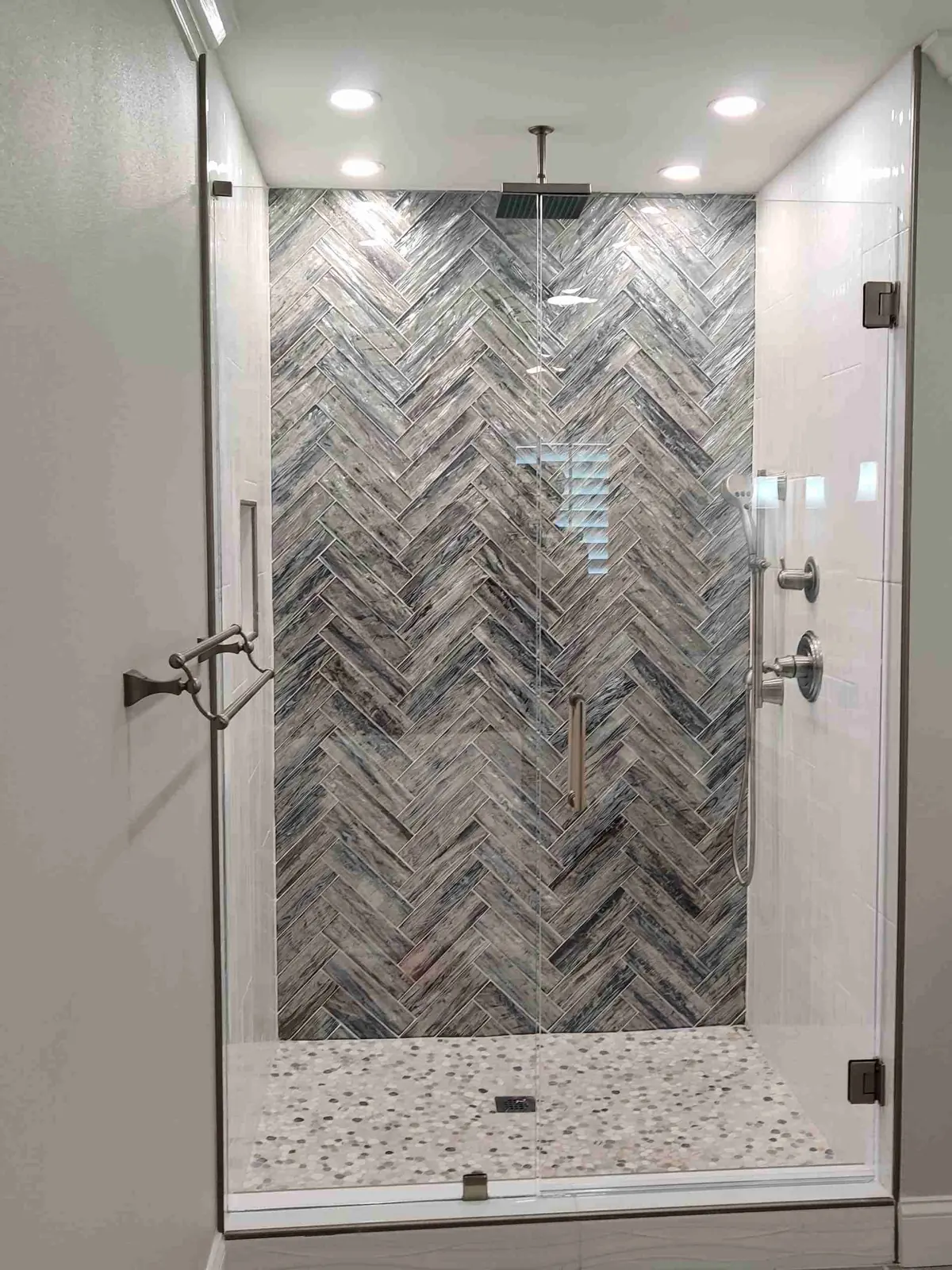
Hardware, finishes, and long-term performance
Hinges, handles and brackets get used every day, and a heavy glass door hangs on them. Undersized or cheap hardware is a common reason a door starts to sag or stick.
Chrome, brushed nickel and matte black are the common finishes. Pick the one that matches your faucet, showerhead and towel bars so the room looks planned.
Heat and constant moisture are harder on hardware, so for a steam enclosure ask for hardware made for steam use.
Professional installation vs. DIY considerations
Installing a shower door takes more precision than most people expect. Measurements have to be exact, because even a small miscalculation can cause misalignment, leaks around the shower pan, or a door that never quite opens right.
Tempered glass is strong, but it can shatter if handled or positioned incorrectly during installation. Professionals know how to manage that safely. They also understand how to seal properly against shower wall panels, which becomes critical in steam shower setups where any gap defeats the purpose.
Ready to upgrade your shower? Contact us today.