
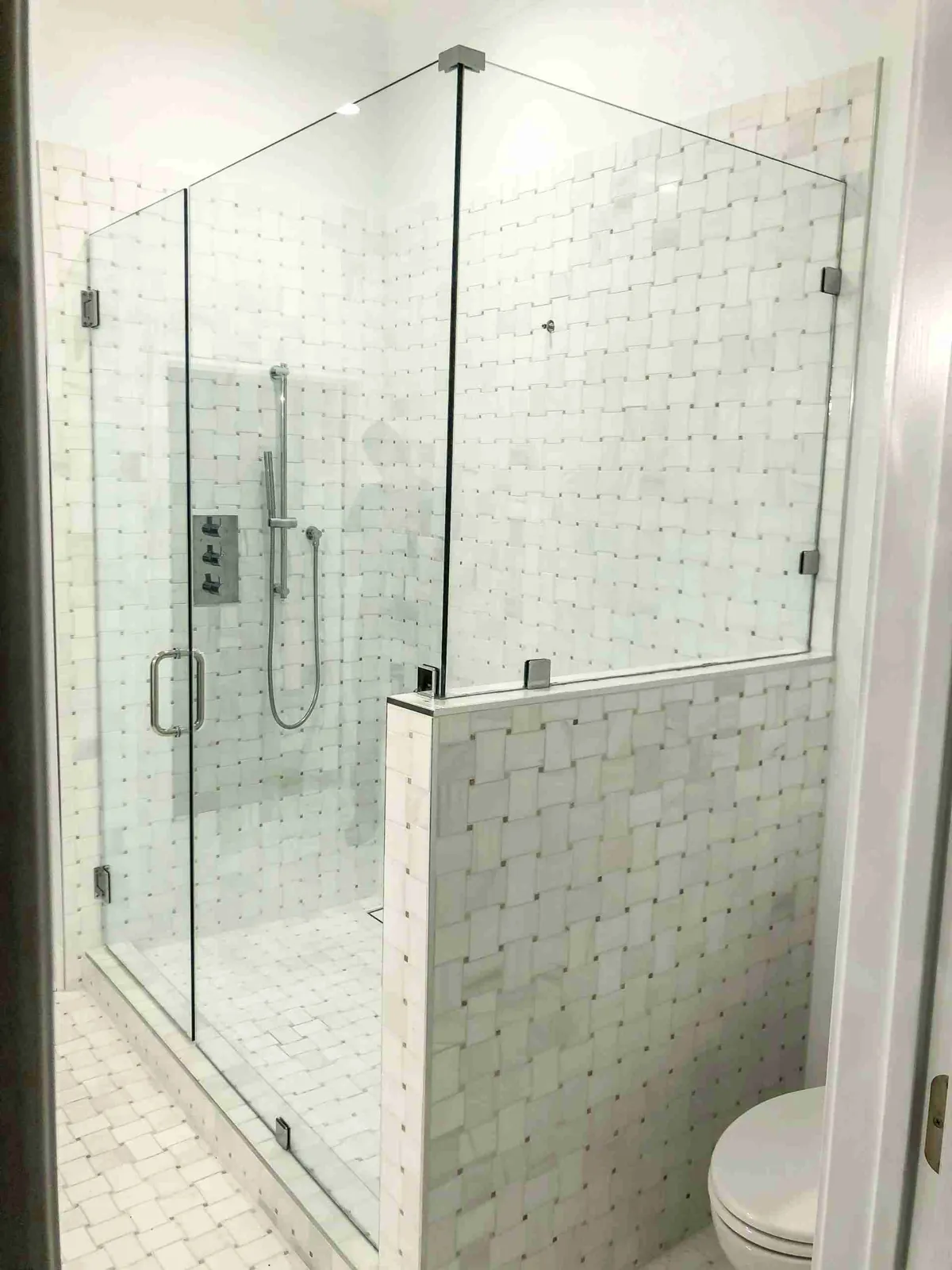
Frameless shower door prices vary because every enclosure is custom priced. The layout matters most: each angle and miter adds fabrication cost. Glass thickness, glass type and hardware finish also affect the price. Here is how each factor moves a quote, so you can read two proposals line by line.
Layout: the biggest price factor
A straight door and panel across an alcove has the fewest angles. A corner enclosure, an angled (neo-angle) layout or a panel that steps around a bench adds angles and miters, and each one adds fabrication cost. A larger shower also uses more glass, so both the shape and the size show up in the price.
Glass thickness
Frameless doors feature shower glass that’s much thicker than what you’ll find on framed doors.
The tempered glass in frameless doors comes in different thicknesses, commonly 3/8 inch and 1/2 inch. Thicker glass weighs more and needs hardware sized for it, so it can raise the cost. The thickness your enclosure needs depends on the panel sizes and layout.
Glass type and hardware finish
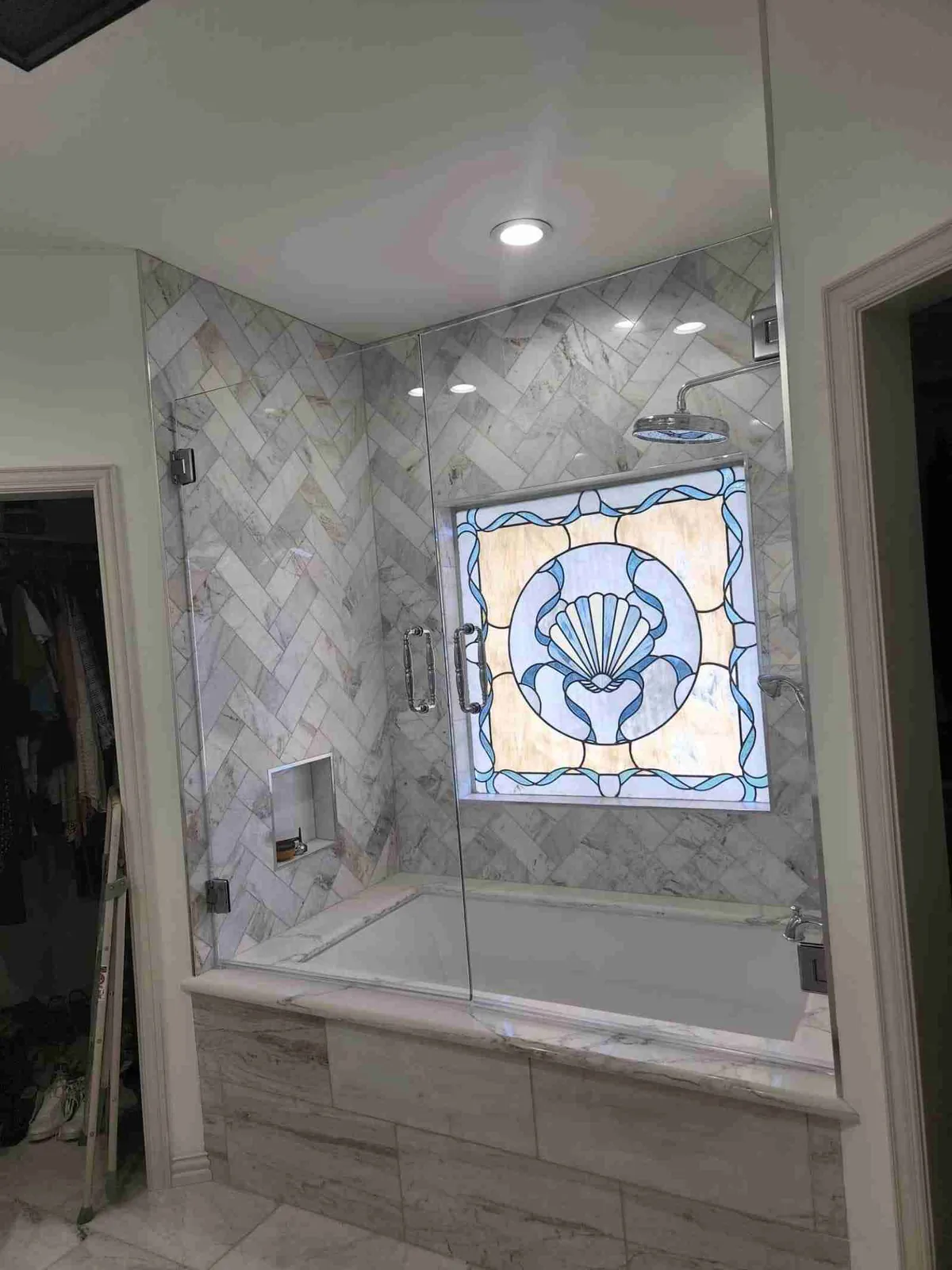
Clear glass, low-iron (ultra-clear) glass and frosted or etched glass are priced differently, and so are hardware finishes. Choose the glass and the finish you want before comparing quotes, and ask each installer to list both in writing.
A door made for your opening usually costs more than an off-the-shelf door. In return it fits the finished opening, instead of forcing the opening to fit a standard size, and it leaves more of the tile in view.
Are custom glass shower doors worth the higher price tag?
A door that does not fit the opening can leave gaps where water gets out. A door made for your measured opening is sized to close those gaps.
If you want a frameless door that fits your opening and shows off the tile, a custom enclosure is worth pricing. Send photos and rough dimensions for a quote within 24 hours, then check it against the factors above.