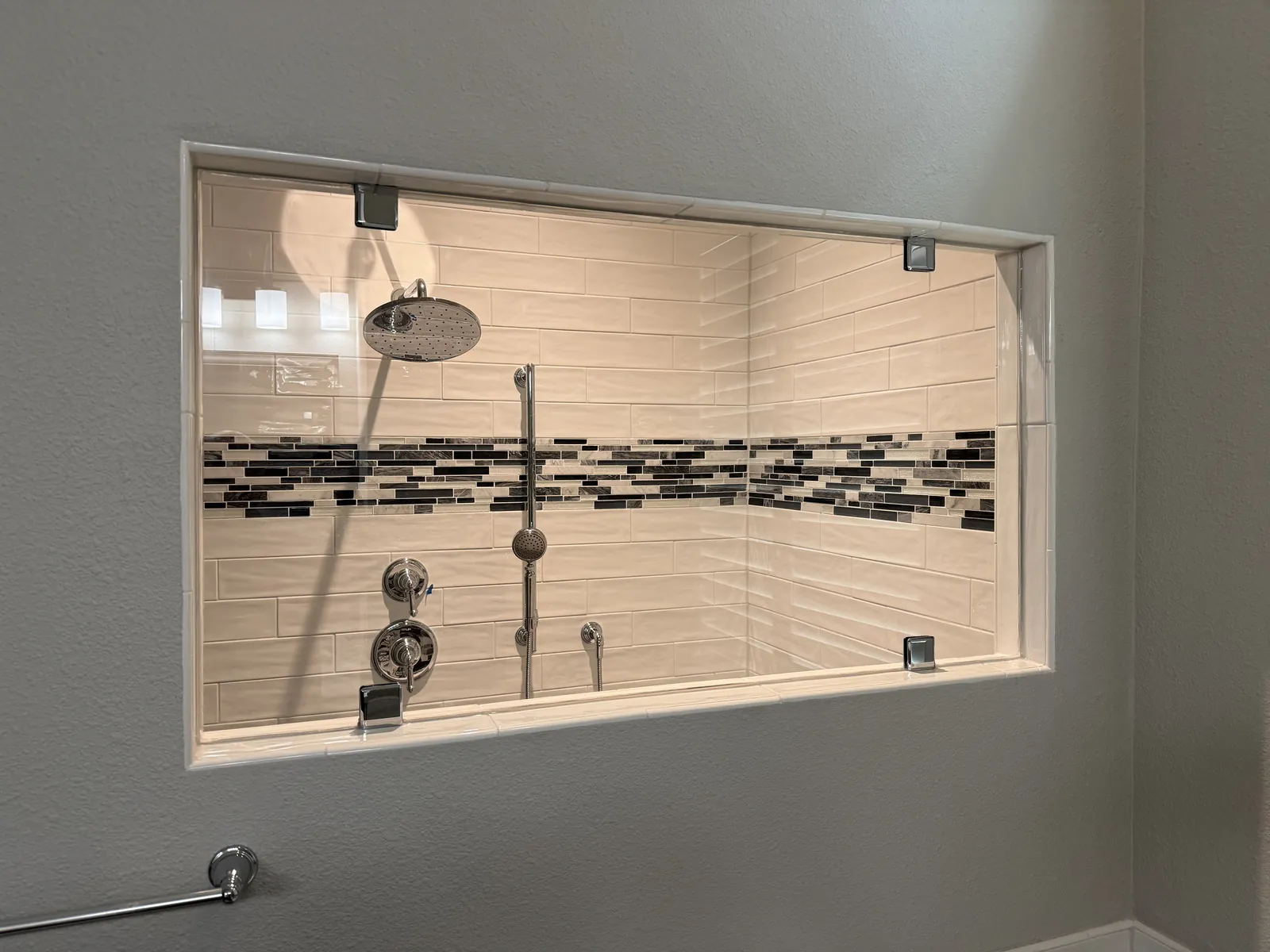
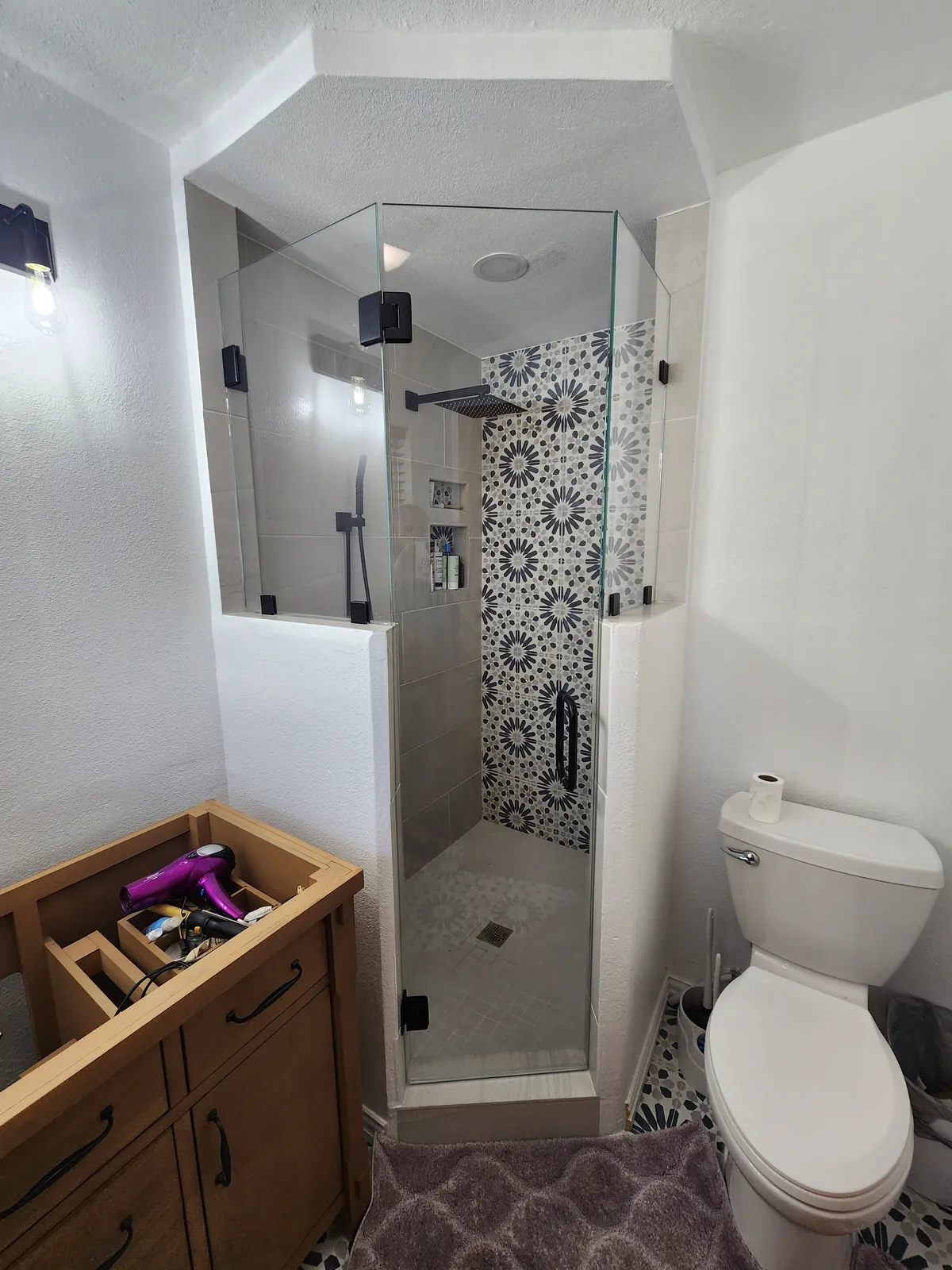
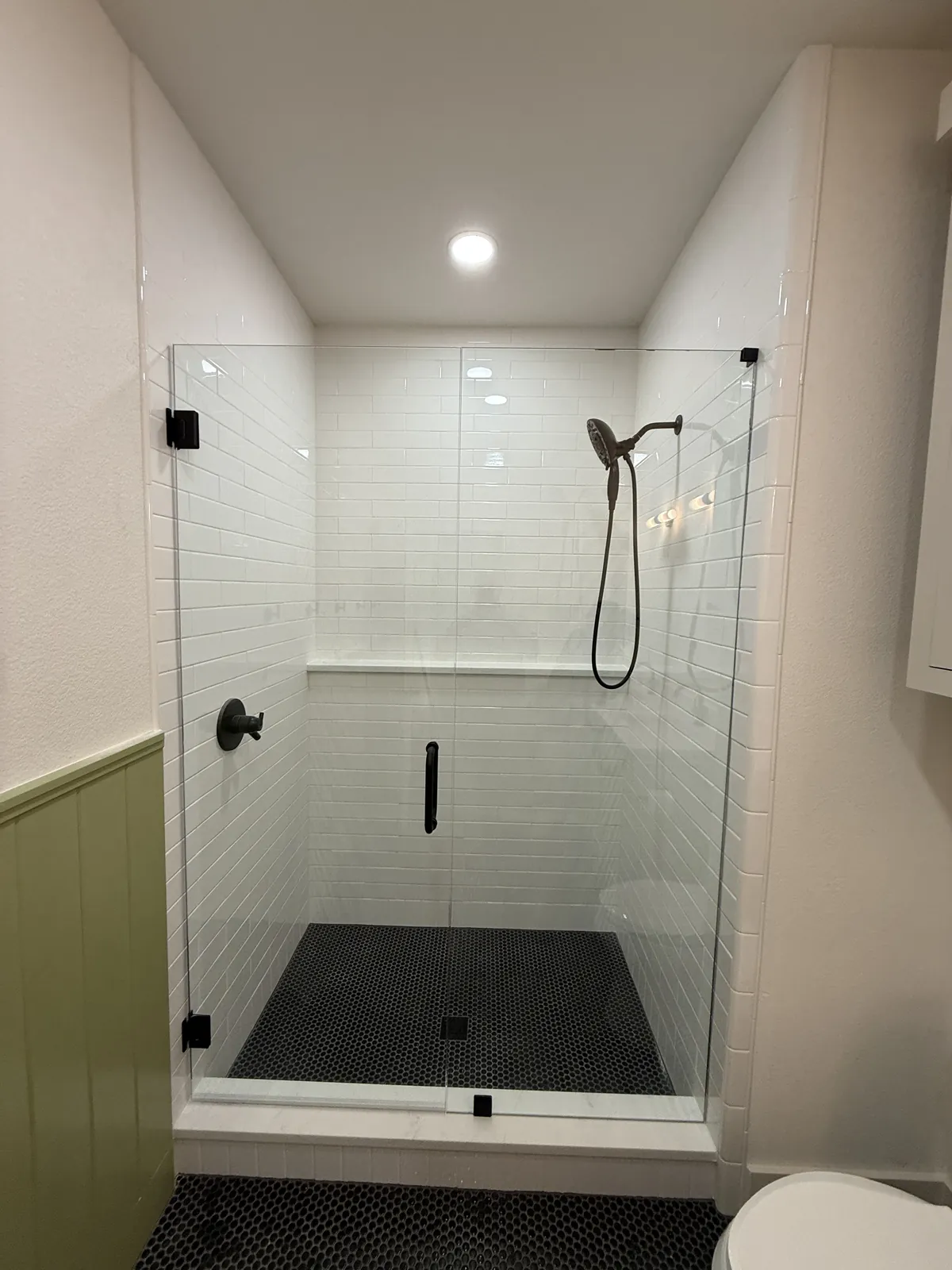
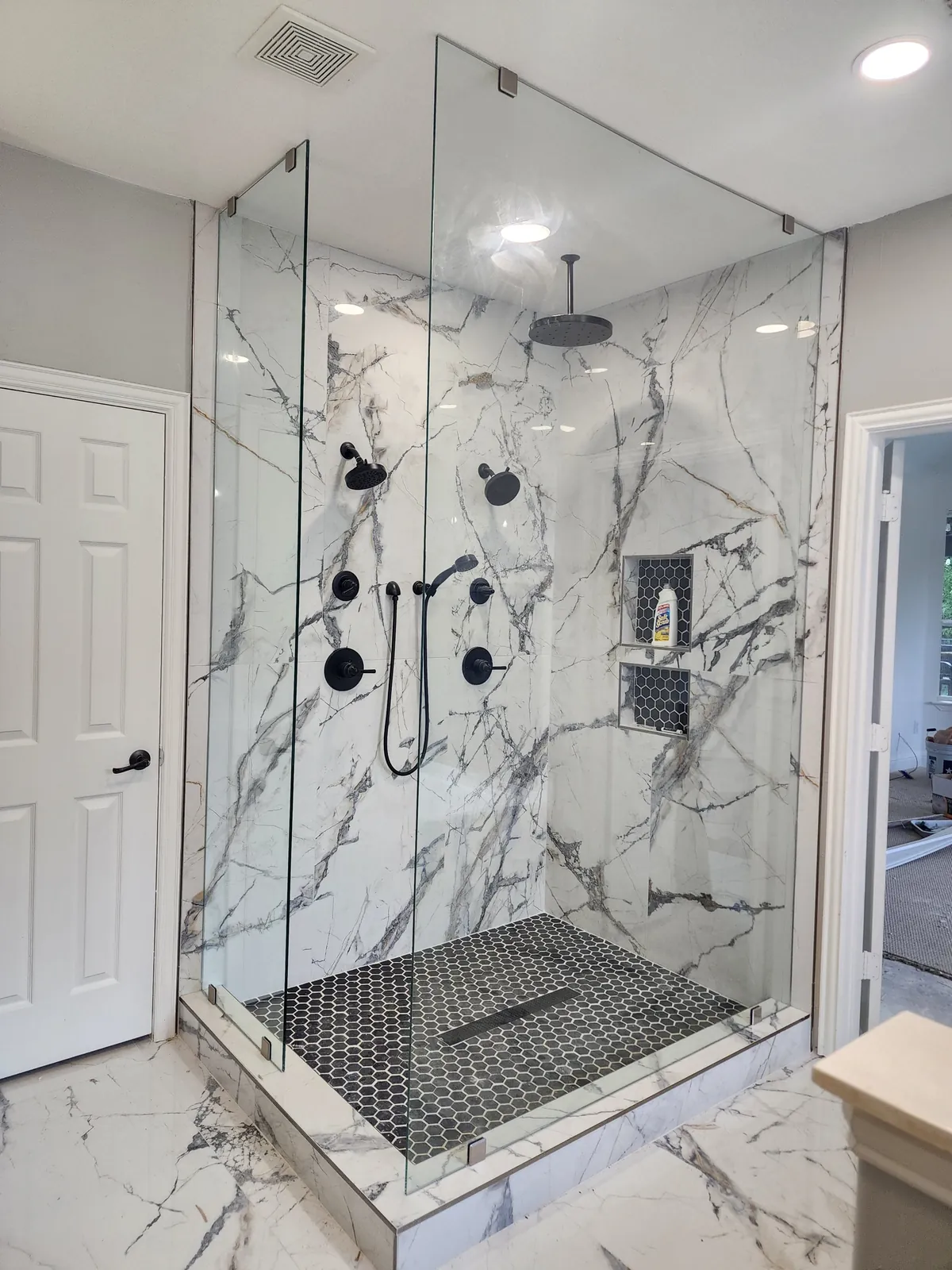
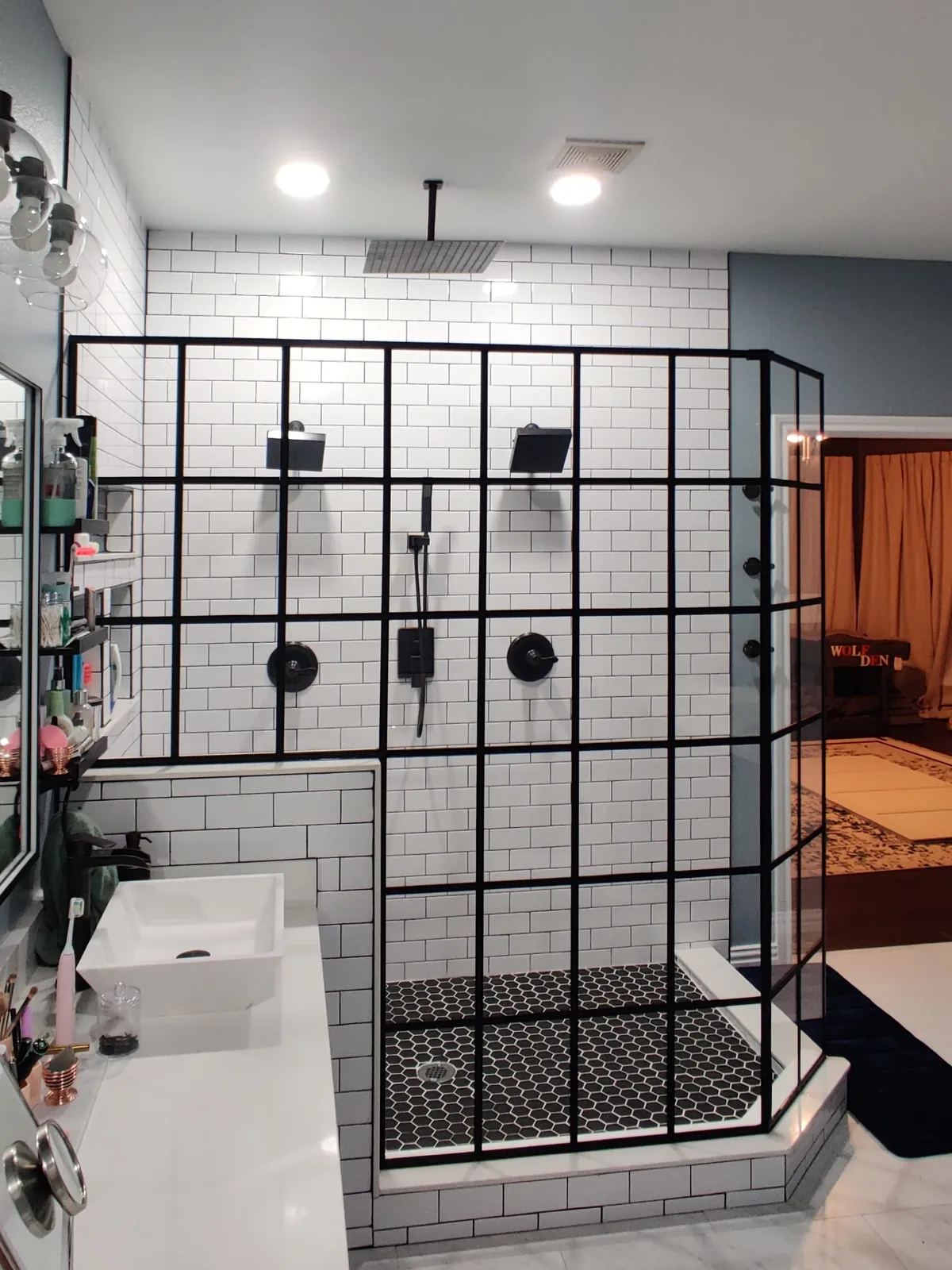
A corner shower uses two adjoining walls and can free up space elsewhere in the bathroom. It can work in a larger room too. The useful question is whether the resulting entrance and layout fit the way you use the space.
Matte black hardware creates a stronger contrast against light tile. Brushed nickel is less reflective and often blends with other bathroom fittings. Compare both with your existing fixtures, including how each finish looks when wet.
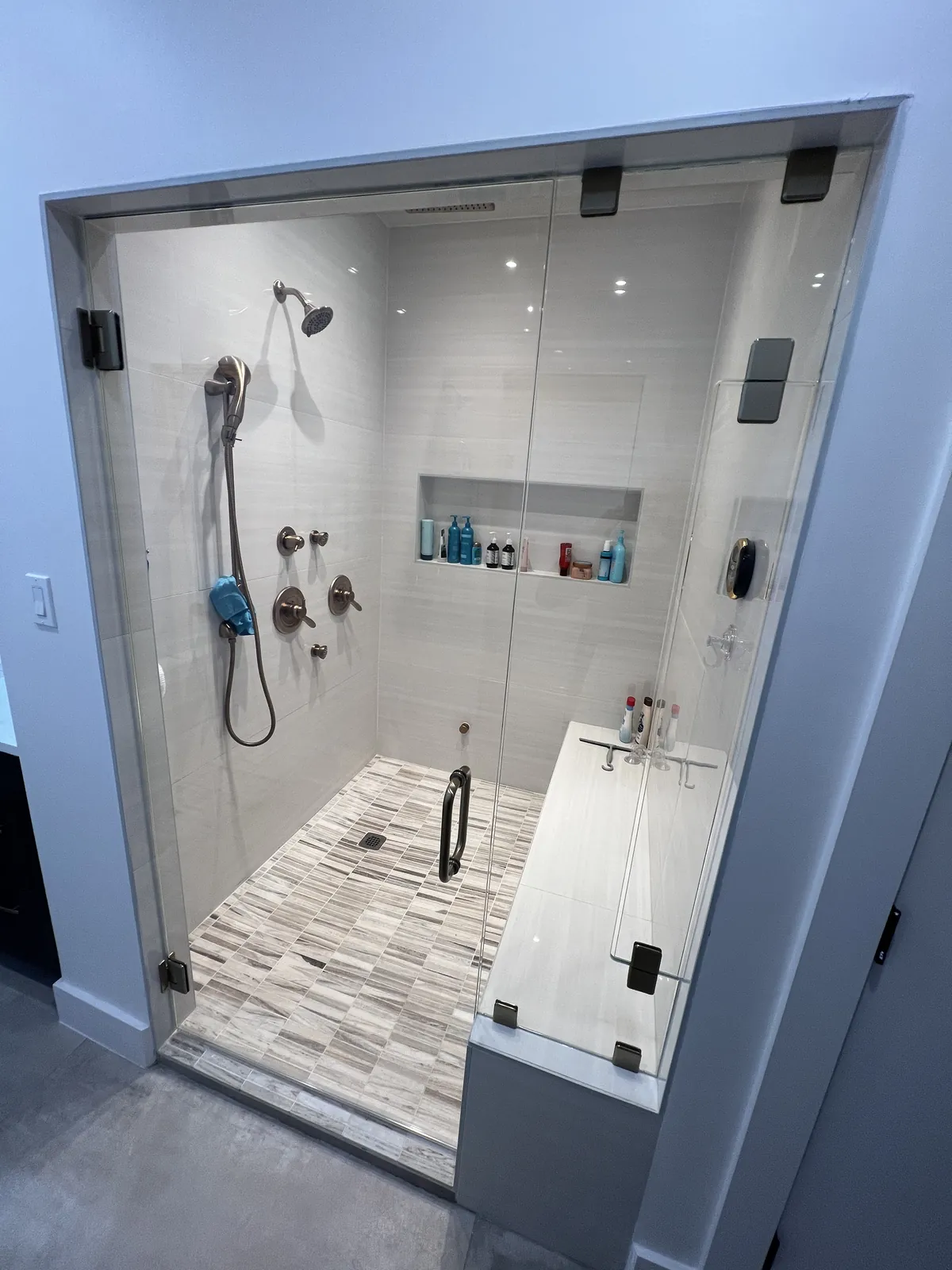
Glass thickness affects a shower panel's weight and the hardware needed to support it. It also changes how the panel looks and feels. The right specification depends on the enclosure, not just a preference for thicker glass.
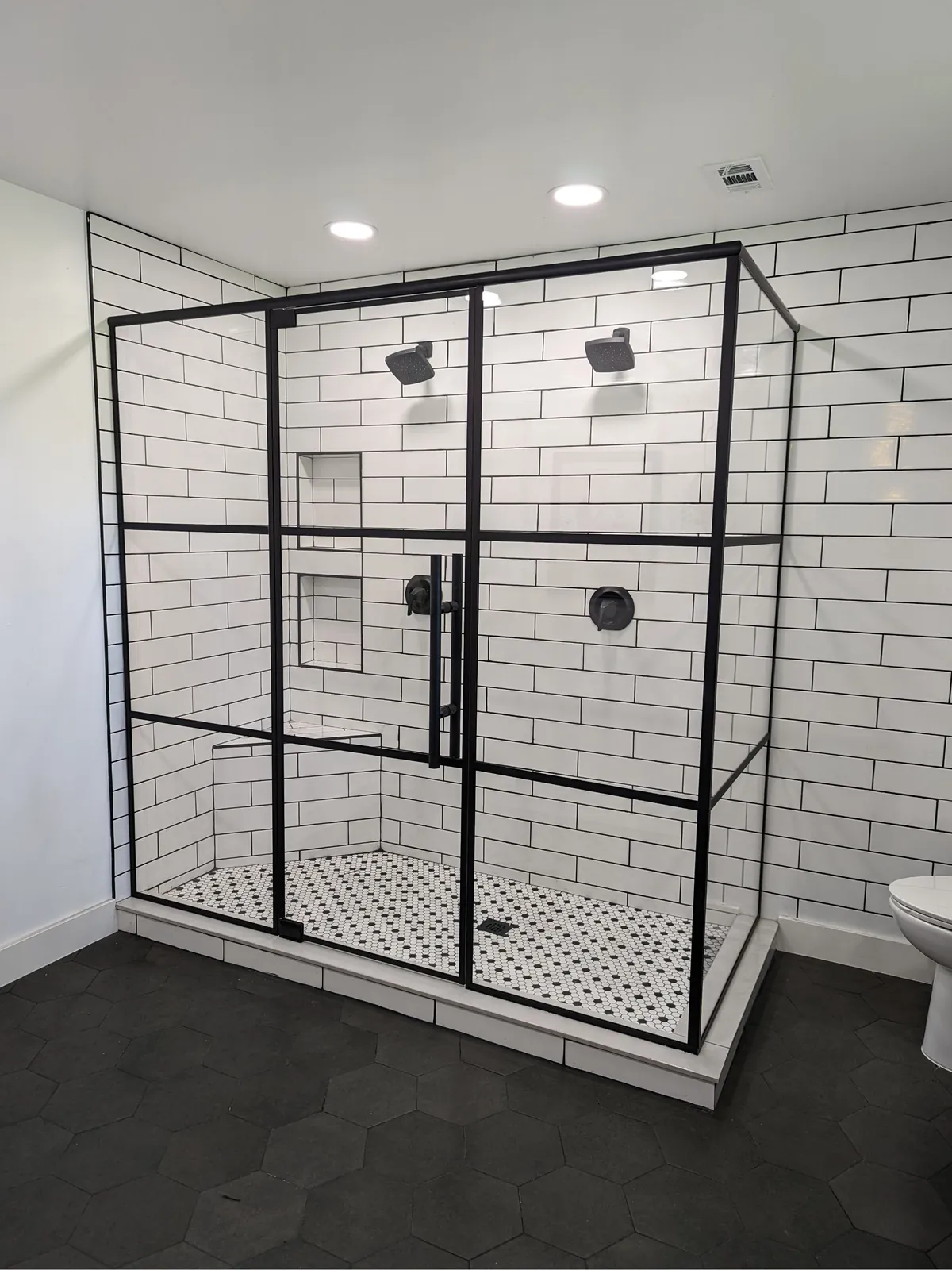
Grid shower doors put a visible pattern across the enclosure. The result can work with industrial finishes or a more traditional bathroom. Look closely at how the grid is made, since that affects the appearance and the surfaces you'll…
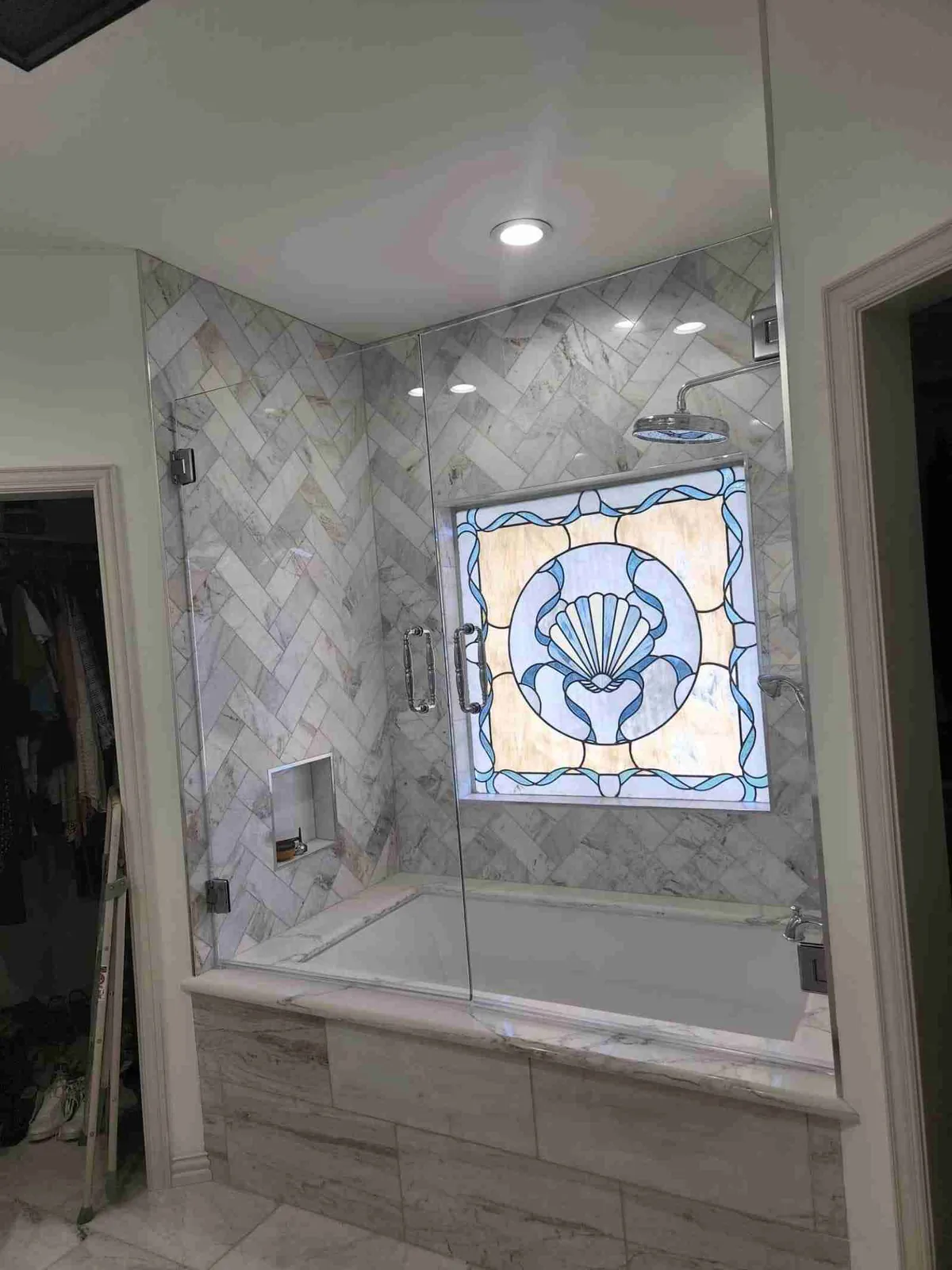
Replacing an old door is a chance to reconsider the opening, privacy and cleaning routine. A frameless option may suit the room, but the existing shower still needs to support it. Have the finished opening assessed before ordering glass.
A shower installation can go wrong before the glass reaches the room. Measurements, support and door clearance all need to be checked in advance. Knowing those checkpoints helps you discuss the job with your installer.
A custom shower door can make the tile easier to see and give you more choice over the opening. It can also solve a fit problem that a standard enclosure doesn't suit. Start with what needs to work better in your bathroom.